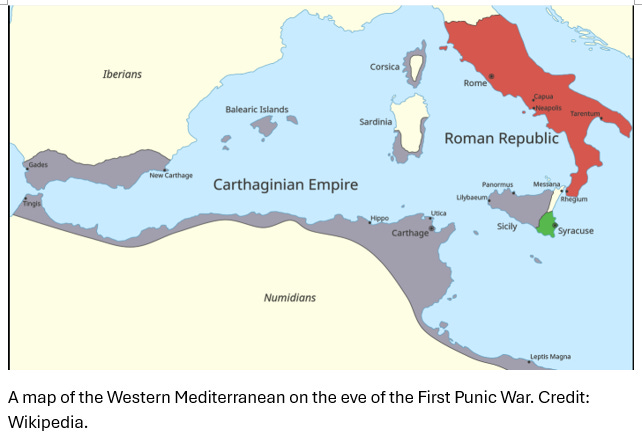
The First Punic War
A History of Mankind (161)

To check all previous newsletters in the History of Mankind, which is pretty long, you can click here.
Hiero II rose to power in Syracuse on the wake of his participation in Pyrrhus campaign in Sicily, as a general, around 275 BC.
A natural-born politician, he soon understood that the era of Greek adventurism in the largest Mediterranean island was drawing to an end: with Pyrrhus gone and no prospect of meaningful help from squabbling Hellenistic kingdoms and much-diminished poleis, little stood in the way of Carthage finally extending its rule over Syracuse. So Hiero II decided to ally with Carthage, which eventually invited Roman intervention on the island.
Romans, like other empires since, enjoyed depicting themselves as accidental imperialists, driven to conquest by defensive operations in which they defeated evil enemies intent on harming them out of pure malice. The British Empire, for example, later used this as the standard explanation for its conquests, even as it went to war with a majority of states on the planet.
The truth is that Roman armies hadn’t stopped aggressing other peoples since the Samnite Wars concluded in 290 BC, by which time Rome had six legions under arms more or less at all times.